
Build a Local Search System That Produces More Qualified Tree-Work Opportunities
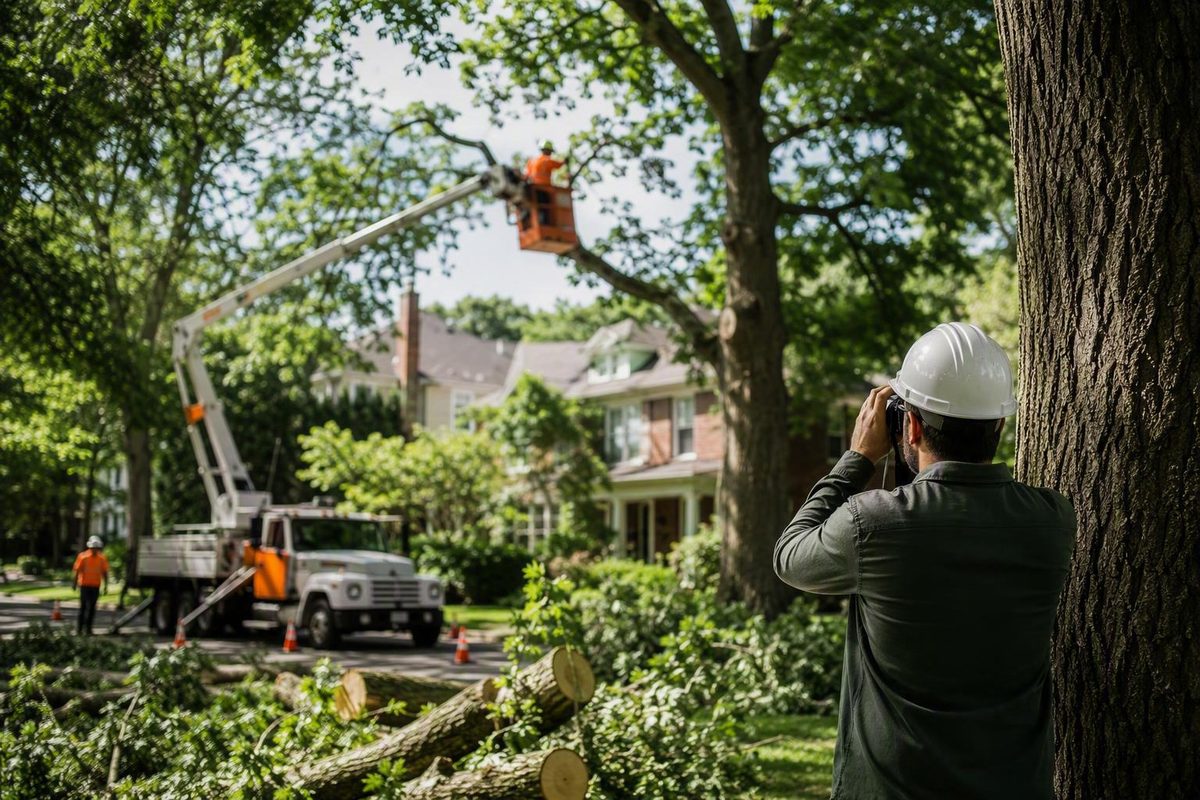
Fallen-limb customers have different priorities from people comparing pruning estimates. The plan ties visibility to qualified calls, booked work and margins.
Build a local search system that produces more qualified tree-work opportunities.
Tree service SEO is not a trick for placing a company at the top of Google. It is an operating system for helping nearby customers discover the business, understand its services, trust its claims, and take a measurable next step.
That system must account for different types of demand. A homeowner dealing with a fallen limb has different priorities from someone comparing pruning estimates. A property manager seeking recurring maintenance needs different evidence from a resident searching for stump grinding. Pages, messaging, calls to action, and follow-up processes should reflect those differences.
The practical goal is larger than rankings. It is to connect Google Maps and organic visibility to qualified calls, estimate requests, booked work, collected revenue, and acceptable margins—without promising outcomes that no SEO provider fully controls.
What tree service SEO includes—and what it can realistically accomplish
Tree service SEO is work intended to improve a tree-care company’s visibility for geographically relevant searches across Google Maps, local results, and standard organic listings. It commonly combines:
- Google Business Profile management
- Dedicated service and location pages
- Authentic customer reviews
- Accurate directory listings and citations
- Relevant local and industry links
- Technically accessible website pages
- Useful educational and project content
- Clear call and estimate paths
- Analytics and lead-quality measurement
This differs from generic SEO because geography, service coverage, urgency, and operating capacity are central to the strategy. A national publisher might seek informational traffic from anywhere. A tree company generally needs visibility among people in communities its crews can profitably reach.
The search journey also changes by job type. Urgent searches may include:
- Emergency tree removal in a city
- Storm cleanup near me
- Fallen tree removal
- Hazardous limb removal
- Tree on house cleanup
Those searchers may need a prominent phone number, accurate operating hours, clear coverage information, and realistic expectations about how inquiries are handled.
Planned searches move differently:
- Tree trimming in a city
- Stump grinding
- Arborist near me
- Tree-health assessment
- Commercial tree maintenance
- Land clearing
- Recurring pruning
A planned customer may research methods, credentials, equipment, timing, property protection, or the estimate process before making contact. The website should support that research rather than forcing every visitor into the same emergency-style experience.
Visibility is not the final outcome
A ranking has limited business value by itself. So does an impression, click, profile view, or website session. Each matters only to the extent that it contributes to an appropriate outcome, such as:
- A qualified call or form submission
- An estimate for work the company performs
- A job within the actual service area
- A booking that fits crew and equipment capacity
- Collected revenue at an acceptable margin
- A satisfied customer who may return or refer others
This distinction prevents a common reporting problem: celebrating traffic while the company receives inquiries for unsupported services, distant areas, employment, low-value work, or jobs that cannot be scheduled.
Results also depend on variables outside an SEO provider’s control. Proximity can affect local visibility. Competitor strength varies by community. Market size, website history, seasonality, storm events, service mix, crew availability, phone handling, estimate speed, and sales follow-up can all influence performance.
A strong campaign can improve the accuracy, usefulness, and discoverability of a company’s presence. It cannot make every searcher see the same result, eliminate established competitors, create demand on command, or compensate indefinitely for unanswered calls.
Understand the limits of the available evidence
Repeated recommendations—such as maintaining an accurate profile, building dedicated service pages, requesting authentic reviews, and improving mobile contact paths—indicate practitioner consensus. They do not prove that one tactic caused a ranking, lead, or revenue increase.
That limitation is especially important when evaluating precise claims. Vendor estimates for timelines, costs, click shares, review thresholds, content length, loading speed, lead value, and return on investment vary substantially. They should not be treated as universal benchmarks.
No legitimate provider controls Google, customer behavior, weather, competitors, or a tree company’s sales and field operations. Reject guarantees involving:
- A number-one ranking
- Map-pack placement
- A fixed number of leads
- A particular revenue increase
- Results within a fixed period
- A universal return on investment
A credible plan defines the work, documents assumptions, measures business outcomes, and explains uncertainty.
Map tree-service keywords to urgent, planned, and informational intent
A useful keyword plan starts with the customer’s situation, not a spreadsheet sorted only by search volume. Organize potential searches into five practical groups.
| Intent group | Example searches | Appropriate destination |
|---|---|---|
| Urgent or event-driven | emergency tree removal in a city, storm cleanup, fallen tree removal | Emergency or storm-service page |
| Planned transactional | tree removal near me, tree trimming in a city, stump grinding | Dedicated service page |
| Diagnostic or informational | signs a tree may need assessment, why are oak leaves turning brown | Educational article connected to a relevant service |
| Seasonal | storm preparation, pruning timing, regional pest activity | Seasonal guide or service-supporting article |
| Commercial or recurring | commercial tree maintenance, HOA tree service, property-management pruning | Commercial service page |
Removal, trimming or pruning, stump grinding, emergency work, arborist services, storm cleanup, and land clearing are common themes in vendor-authored tree-service keyword guidance. A company should target only services it genuinely provides. One representative commercial guide organizes tree-service searches into transactional, informational, and seasonal groups while recommending dedicated destinations for important queries. Four Arrows Marketing explains its keyword framework.
Prioritize business fit before volume
A term with modest estimated demand may be more valuable than a broad, high-volume phrase when it closely matches the company’s capabilities. Score opportunities against:
- Service fit: Does the company perform this work?
- Geographic fit: Can crews reach the searcher economically?
- Business value: Is the likely work worth estimating?
- Capacity fit: Are the appropriate crew and equipment available?
- Margin potential: Can the job remain profitable after acquisition and delivery costs?
- Estimate intent: Is the searcher likely to be choosing a contractor?
- Evidence availability: Can the company support the page with genuine expertise and project proof?
This prevents a stump-grinding specialist from overinvesting in broad arborist topics or a residential operator from attracting municipal requests it cannot fulfill.
Match the page to the searcher’s urgency
An emergency page should make calling easy. It should state real hours, supported areas, and the information needed to assess an inquiry. Do not claim around-the-clock availability if calls are not consistently answered or crews cannot be dispatched.
Because storm and tree hazards can involve conditions outside a contractor’s role, avoid publishing improvised safety directions. Any immediate-safety language should be reviewed against current guidance from the appropriate emergency, utility, occupational-safety, and qualified arboriculture authorities. The page can explain how the company handles calls without presenting itself as the authority for every emergency.
A pruning, tree-health, or assessment page can offer a slower educational path. It might explain common reasons for service, what an evaluation covers, how access affects planning, and why removal may not always be the first option. The call to action can invite an assessment or estimate rather than imply emergency response.
Commercial intent deserves its own path. Property managers, HOAs, municipalities, and commercial owners may need scheduling coordination, site reporting, recurring programs, procurement documentation, or evidence of crew capacity. A residential page with a few references to “commercial” work rarely answers those questions.
Use research tools as inputs, not forecasts
Potential research sources include:
- Google Keyword Planner
- Google Search Console
- Google Business Profile query information, when available
- People Also Ask results
- Customer call notes
- Estimate descriptions
- Paid-search query reports
- Commercial tools such as Semrush or Ahrefs
- Competitor pages, used for market observation rather than copying
These sources can reveal customer language, query variations, and emerging questions. Their estimates do not guarantee demand. A low-volume label may conceal commercially useful local searches, while a high-volume phrase may be broad, informational, or geographically irrelevant.
Interview estimators and call handlers as part of the research. They know which phrases customers use, which jobs are frequently misunderstood, which areas create travel problems, and which questions repeatedly delay estimates.
Create a keyword-to-page map
Before publishing, assign each important search purpose to one primary destination.
| Search purpose | Primary page |
|---|---|
| Tree removal in the core market | Tree removal service page |
| Emergency removal or storm hazard | Emergency tree service page |
| Stump removal after felling | Stump grinding page |
| Health or risk evaluation | Arborist assessment page |
| Services in a priority community | Substantial city page |
| HOA or property portfolio work | Commercial maintenance page |
The map reduces accidental overlap. If three pages all target “tree removal in Oakville” without distinct purposes, visitors and search systems may struggle to identify the most useful destination. Consolidating those pages may be better than publishing another near-duplicate.
Maintain a seasonal calendar for storm preparation, regional pruning periods, pests, diseases, permit questions, and anticipated customer concerns. Publish early enough for discovery and internal promotion, but do not assume that early publication guarantees rankings.
Establish the local foundation with an accurate Google Business Profile
Google Business Profile is a central local-search asset for a tree company, but it is not a replacement for a useful website. The profile can provide immediate business information and map visibility. The website can explain services, present evidence, answer complex questions, and convert visitors who need more confidence.
Use this setup checklist:
- Real-world business name
- Accurate primary phone number
- Current operating hours
- Truthful emergency availability
- Correct website destination
- Supported service areas
- Applicable services
- Relevant business categories
- Real project photographs
- Professional review responses
- Accurate customer-facing description
Commercial tree-service guides repeatedly recommend Tree Service as the primary category when it accurately represents the company. Secondary categories should be added only when they apply to real operations—not merely because a competitor uses them. FlashCrafter summarizes this practitioner recommendation.
Do not turn the business-name field into an advertising headline. Use the name by which the company is genuinely represented in the real world, and verify current platform rules before editing profile identity fields.
Treat eligibility as a current policy question
Profile eligibility, address display, service-area representation, and additional-location rules are platform-policy questions. The vendor-authored evidence available here is not authoritative enough to provide detailed instructions, and platform requirements can change.
Before displaying or hiding an address, changing the business model, or creating another profile, consult current official Google Business Profile documentation. Distinguish between a legitimate operating address—including a residence where a qualifying service-area business may be based—and fabricated locations created to appear in additional cities.
A company with several genuine locations has different considerations from one service-area business covering multiple communities. Do not assume that serving a city establishes eligibility for a separate profile there.
The same truthfulness standard applies to service areas and hours. List only areas the company can routinely support and hours during which customers can reasonably expect a response. If emergency availability changes by season or staffing level, the profile and website should not imply otherwise.
Establish a maintenance routine
A profile becomes outdated when no one owns it. Assign responsibility for a recurring review covering:
- Holiday and seasonal hours
- Current services
- Phone and website links
- User-suggested edits
- New project photographs
- Legitimate customer questions
- Review responses
- Changes in coverage or availability
Project photographs should show actual work and be selected for clarity, not uploaded merely to create “activity.” Profile updates may help customers, but the supplied evidence does not establish Google Posts, image geotagging, posting frequency, or exact service-area wording as proven ranking levers. Use profile features to communicate accurate information—not because a vendor promises a ranking effect.
Build service, emergency, and city pages that deserve to rank
A tree-service website should make its operating model understandable. For many companies, that means dedicated pages for core services such as:
- Tree removal
- Tree trimming or pruning
- Stump grinding
- Emergency tree service
- Storm cleanup
- Arborist assessments
- Tree-health treatment
- Land or lot clearing
- Commercial tree service
Only publish pages for work the company offers and can explain accurately. A dedicated page is useful when a service has distinct customer concerns, processes, evidence, and conversion needs—not merely because a keyword tool found a variation.
A practical service-page blueprint
A strong service page can cover:
- The customer’s problem: What usually brings someone to this service?
- Service scope: What is and is not included?
- Appropriate use cases: When might the service be considered?
- Assessment process: What happens before an estimate or recommendation?
- Work process: What should the customer expect?
- Access and equipment: How can gates, slopes, nearby structures, utilities, or equipment access affect planning?
- Safety and property protection: Which company-specific, documented practices can be described?
- Local proof: Which relevant projects can be shown?
- Photographs: Do they clarify the work rather than merely decorate the page?
- Frequently asked questions: What repeatedly prevents customers from calling?
- Related services: Might the visitor also need stump grinding, pruning, or an assessment?
- Service area: Where is the work available?
- Next action: Should the visitor call, request an estimate, or schedule an evaluation?
Licenses, insurance, certifications, arborist credentials, equipment, safety programs, coverage, and response times must be accurate and documented for the specific company. Never copy trust claims from a competitor or display generic badges that cannot be verified.
Safety-sensitive copy should be reviewed by an appropriately qualified person. Marketing staff should not invent hazardous-work procedures or turn general website content into technical safety instruction.
Give emergency searches a separate path
An emergency page should be more direct than a routine service page. Include:
- A prominent click-to-call option
- The areas covered
- Actual operating and phone-answering hours
- Realistic inquiry and dispatch expectations
- Safety language reviewed against appropriate authoritative guidance
- Relevant storm-work photographs or case studies
- The information callers should be prepared to provide
- Clear limits on services or availability
Useful intake information may include the property location, the apparent type of damage, whether access is blocked, and whether utilities, structures, vehicles, or other hazards appear to be involved. The purpose is to route the inquiry—not to have an untrained caller diagnose risk.
Exact instructions should follow the applicable local and utility guidance, not generic marketing copy.
Do not promise a response time unless operations can reliably support it. During a regional storm, update expectations as call and crew capacity changes.
Pilot city pages instead of manufacturing them
Some vendor guides recommend a page for every service-and-city combination. Applied mechanically, that approach can create dozens or hundreds of weak pages. A safer strategy is to pilot substantial pages for the most important communities and expand only when the company has enough distinct local value to publish.
A useful city page may include:
- Relevant completed projects
- Original local photographs
- Regional species and common tree conditions
- Storm or weather considerations
- Known pest or disease concerns
- Municipal or permit questions
- Access constraints associated with local property types
- Disposal and hauling logistics
- Neighborhoods genuinely served
- Connections to relevant service pages
- A clear estimate path
Project case studies can provide location details, photographs, and explanations of completed work as evidence of first-hand experience. A commercial Tree Service Digital guide provides examples of localized project and permit topics, although it does not prove that publishing them will cause rankings. Review its case-study examples.
A weak city page changes “Springfield” to “Riverside” while leaving every other sentence intact. A useful page explains what serving that community actually involves.
Adjust the architecture to the company model
A single service-area company generally needs one coherent business presence, strong core service pages, and a selective group of locally substantial area pages.
A company with multiple legitimate locations may need distinct location pages and profile governance. Each page should represent the actual location, personnel, coverage, and contact experience—not a fictional branch.
A commercial provider should consider pages for the buyers it serves: property managers, HOAs, municipalities, facilities teams, or recurring-maintenance clients. Those pages can discuss reporting, scheduling, documentation, procurement requirements, and contract structure, provided every claim reflects real capabilities.
Turn completed jobs into reviews, local proof, and useful content
The most sustainable source of local content is the work the company already performs. Completed projects can support reviews, case studies, photographs, service explanations, and answers to recurring questions.
Create a neutral review workflow
A practical review process can follow these steps:
- Confirm the job is complete.
- Thank the customer.
- Send a neutral request by text or email.
- Include a direct review link.
- Optionally add a QR code to an invoice or leave-behind.
- Record that the request was sent.
- Respond professionally if a review is posted.
A suitable request is:
Thank you for choosing us. If you would like to share an honest account of your experience, you can leave a review here: [direct review link].
Do not ask for a particular rating or fabricate customer feedback. Avoid incentives, selective solicitation designed to filter out likely negative feedback, or any other practice that may conflict with the review platform’s current rules. Verify the applicable policy before launching the workflow. A practitioner guide recommends direct links and QR codes while warning against exchanging discounts or gift cards for reviews, but it should not replace current platform documentation. See the cited review workflow.
Respond to positive reviews with a brief, genuine acknowledgment. For negative feedback, avoid public arguments or unnecessary disclosure of job details. Recognize the concern, invite direct contact, investigate the record, and move detailed resolution to an appropriate private channel.
Convert project records into case studies
A useful project case study can document:
- Location at an appropriate level
- Initial condition, hazard, or customer objective
- Assessment
- Access constraints
- Equipment used
- Documented safety controls
- Work completed
- Disposal or cleanup considerations
- Before-and-after evidence
- Relevant next steps
Protect customer and property information. Establish a documented process for deciding what may be published, obtaining any consent the company requires, and handling identifiable images or statements in accordance with applicable rules.
Case studies work especially well when they answer questions generic service copy cannot. A crane-assisted removal near a confined driveway, for example, provides different evidence from routine pruning in an open yard.
Build educational content from real questions
Potential topics include:
- Warning signs that warrant a professional assessment
- Regional tree species and common concerns
- Pruning timing in the local climate
- Storm preparation
- Post-storm inspection questions
- Local pests and diseases
- Permit or municipal process questions
- Stump-grinding preparation
- Access requirements
- Information needed for an estimate
- Commercial maintenance planning
Safety, plant-health, legal, and permit content should be checked by an appropriate qualified source before publication. Local rules and technical recommendations can vary.
Each article should have a logical next step. A guide about warning signs might connect readers to an assessment page. A storm-preparation article might lead to pruning and emergency information. A permit article can direct readers to the relevant city and removal pages.
There is no defensible universal word count or keyword-density requirement. Publish enough original information to answer the question, demonstrate first-hand knowledge, and help the reader decide what to do next.
Fix the technical and conversion problems that waste local demand
Publishing more pages will not solve a website that search systems cannot access or customers cannot use. Address foundational issues first:
- Crawlability
- Indexability
- HTTPS
- Mobile usability
- Clear navigation
- Unique page titles and headings
- Useful internal connections
- Working phone links
- Short estimate forms
- Accurate location and service information
A page can be technically accessible and still fail commercially. A visitor should be able to answer four questions quickly:
- Does this company provide the service I need?
- Does it serve my location?
- Is there credible evidence behind its claims?
- What should I do next?
If those answers are buried in generic copy, a technically “optimized” page may still waste the visit.
Improve image-heavy tree-service websites
Project photography is valuable, but unrestrained galleries can make mobile pages difficult to load and navigate. For each image:
- Compress the file
- Use dimensions appropriate to its display size
- Choose a sensible filename
- Add descriptive alternative text when the image communicates useful information
- Include a contextual caption when it improves understanding
- Avoid uploading multiple near-identical images
- Connect major projects to case studies where appropriate
High-intent pages should include a visible click-to-call option, a short estimate form, an accurate description of the service area, and truthful availability information. Ask only for information needed to route or qualify the inquiry. Longer forms may be appropriate for commercial requests that genuinely require more detail.
Measure technical and conversion behavior
- Tapping the phone number
- Submitting an estimate form
- Visiting a confirmation page
- Opening directions
- Starting a commercial inquiry
Neither system tells the complete story alone. A phone click is not necessarily a connected call, and a form submission is not necessarily a qualified opportunity. Connect website data with call records, estimates, bookings, and revenue where practical.
It should be configured by someone who understands how to preserve accurate public-facing business information. Avoid unsupported universal setup rules.
Use structured data cautiously
It does not guarantee a ranking improvement or a rich result.
Before implementing markup, verify current eligibility and required properties against official search-engine documentation. Prioritize accurate visible content first. Markup should reflect information customers can see and the business can document; it should not manufacture credentials, reviews, services, locations, or availability.
Technical priorities should be based on their effects on accessibility, conversion, and measurement—not arbitrary page-speed scores, fixed content lengths, or plugin checklists.
Earn local authority without chasing citation or backlink counts
A citation is an online reference to the business, often on a directory, industry listing, social profile, or local organization’s website. Citations can help customers and platforms connect business information across the web, but quantity is not the objective.
Start by correcting material errors in:
- Business name
- Address or service-area representation
- Phone number
- Website link
- Operating status
- Service category
- Hours
Aim for coherent information without obsessing over harmless formatting variations. “Street” versus “St.” is less concerning than an old phone number, former address, incorrect website, or duplicate listing that confuses customers.
Evaluate directories based on:
- Relevance to tree care or the local market
- Legitimacy
- Actual customer use
- Editorial standards
- Fees and renewal terms
- Ability to represent the business accurately
- Lead ownership or sharing terms
Do not assume every directory named in a marketing checklist is worth the time or cost.
Pursue relationship-based links
Potential sources of legitimate links and mentions include:
- Chambers of commerce
- Tree-care organizations
- Landscapers
- Property professionals
- Home or building inspectors
- Community groups
- Local sponsors
- Municipal resources
- Trade partners
- Suppliers
- Relevant nonprofit projects
The relationship or resource should exist independently of the link. A fabricated partnership page or mass reciprocal exchange is not genuine local authority.
Useful link-earning assets might include a local storm-preparation guide, a species-specific care resource, a municipal permit explainer, or a documented community project. Townsquare Interactive’s commercial guide identifies local collaboration, useful guides, directories, and community participation as common authority-building approaches, but does not establish a guaranteed ranking effect. Read its authority-building recommendations.
Avoid:
- Paid-link schemes intended to manipulate search visibility
- Bulk low-quality directory packages
- Indiscriminate guest posting
- Fabricated sponsorships or partnerships
- Automated outreach unrelated to tree care
- Reciprocal exchanges created primarily for ranking manipulation
Search-engine policies can change, so evaluate link practices against current official spam guidance before implementation.
The available evidence does not establish a required citation count, backlink count, or universal effect from acquiring either. Relevance, legitimacy, usefulness, and editorial judgment are more defensible standards than volume.
Once per quarter, review major listings, broken inbound and internal links, old service areas, obsolete business descriptions, and closed or renamed accounts.
Execute a 30-, 60-, and 90-day plan—and measure booked work
The first 90 days should establish a measurable operating system rather than produce the largest possible number of pages.
Days 1–30: establish accuracy and measurement
- Confirm Google Business Profile accuracy and verify current eligibility requirements.
- Review the business name, category, phone, hours, services, and coverage.
- Document baseline Maps and organic visibility without treating one manual search as definitive.
- Verify that important pages are indexed.
- Test mobile navigation, phone links, and forms.
- Install or validate analytics.
- Define meaningful conversion events.
- Establish a qualified-lead classification process.
- Record the source and landing page where systems permit.
- Identify the highest-value service and most serious conversion obstacle.
A basic classification might distinguish qualified residential, emergency, commercial, out-of-area, unsupported service, employment, vendor, spam, and existing-customer calls.
Days 31–60: strengthen the highest-value paths
- Improve the most important service pages.
- Build or revise the emergency page.
- Compress project images.
- Add documented trust evidence.
- Clarify service areas and availability.
- Launch the neutral post-job review workflow.
- Correct major directory errors.
- Create a repeatable case-study template.
- Confirm that calls and forms can be connected to estimates.
Choose work based on likely business impact. Fixing an unusable mobile contact path is usually more urgent than publishing a fifth informational article.
Days 61–90: pilot and evaluate
- Publish one substantial city page with real local proof.
- Add several project case studies.
- Connect case studies to relevant service and location pages.
- Begin outreach to legitimate local and industry relationships.
- Review profile and website inquiries.
- Assess impressions, qualified contacts, estimates, bookings, and margin where available.
- Decide whether the city-page model deserves expansion.
- Document the next quarter’s priorities.
The pilot approach protects the company from scaling weak templates. A city page that attracts impressions but no appropriate inquiries may need better intent alignment, stronger evidence, more time, or a different priority.
Measure the full funnel
Build reporting around this sequence:
Search query or discovery source → landing page or profile → call or form → qualified opportunity → estimate issued → job booked → revenue collected → gross margin → acquisition cost
Track, where practical:
- Lead type
- Requested service
- Customer location
- Estimated job value
- Estimate outcome
- Close rate
- Required crew or equipment
- Revenue
- Gross margin
- Marketing cost
A raw call count is not enough. Ten unsupported-service inquiries may be less valuable than two appropriate removal estimates.
Attribution will remain imperfect. A customer might discover the company in Maps, return later through branded search, visit directly on another device, or mention a referral when several channels influenced the choice. Use attribution as decision support, not absolute truth.
Compare SEO with paid channels on business economics
Paid search and Local Services Ads may produce demand faster than organic visibility develops, but they carry continuing media or lead costs. SEO often develops more slowly and still requires ongoing labor, content, technical maintenance, and measurement.
Compare channels using:
- Speed to useful demand
- Continuing cost
- Search intent
- Lead quality
- Service-area fit
- Call-handling capacity
- Close rate
- Cost per booked job
- Gross profit after acquisition and delivery costs
Tree Traction recommends tracking cost per booked job over a defined period and adding channels only when call handling and follow-up can support more demand. Its published costs and timelines are vendor estimates, not universal benchmarks. The company’s channel comparison characterizes SEO as longer-term and paid search as faster but continuing-cost acquisition.
Decide whether to execute internally or hire help
DIY execution may fit an owner-operator with one straightforward service-area presence, a manageable website, and enough time to maintain the system. Outside help may be appropriate when the company has:
- Profile eligibility or suspension complications
- Multiple legitimate locations
- Serious indexing or technical problems
- A large or disorganized website
- No internal writing or publishing capacity
- Weak analytics and attribution
- Insufficient time for reviews, listings, and local pages
Scope matters more than the label “SEO agency.” One provider may focus on content while another manages profiles, citations, technical fixes, reviews, and reporting.
Searcle says its service costs $3,000 per month and includes demand research, content creation, publishing to existing websites, optimization, and monitoring across Google and AI-search environments. It also says clients retain ownership of published content. These are first-party product claims, not evidence of tree-service performance. Searcle describes its price and service model on its website.
The supplied evidence contains no Searcle tree-service case study, local-pack result, arborist-industry ranking result, lead data, booking data, or revenue evidence. The company also acknowledges that software does not replace specialist judgment for complications such as profile suspensions or multi-location governance. Its local SEO agency guide describes those limitations.
Before hiring Searcle or any provider, clarify whether the engagement includes:
- Google Business Profile management
- Review workflow design
- Citation cleanup
- Technical SEO
- Service-page improvement
- Emergency-page strategy
- City-page development
- Call and form attribution
- Qualified-lead reporting
- Tree-service-specific editorial and safety review
Request relevant evidence rather than assuming general content capability will produce local tree-care results.
Frequently asked questions
How long does tree service SEO take to produce results?
There is no universal timeline. Vendor-authored guides offer estimates ranging from a few months to substantially longer, but those figures are not independent benchmarks. Market competition, proximity, website history, technical condition, service mix, seasonality, content quality, profile eligibility, and execution can all affect progress.
Measure early indicators such as indexing, impressions, relevant queries, profile actions, and qualified inquiries, but do not confuse them with booked work. A sound engagement should define what will be completed in the first 30, 60, and 90 days without guaranteeing when rankings or revenue will appear.
How much should a tree-service company budget for SEO?
Budget should follow scope and business economics rather than a universal monthly number. A small operator handling basic profile maintenance and content internally may spend mainly staff time and software costs. A company requiring technical repairs, multiple-location governance, ongoing content, citation work, attribution, and reporting will need a larger investment.
Vendor-published price ranges vary widely and should not be treated as market standards. Evaluate total cost against qualified opportunities, booked jobs, gross profit, and internal time. Searcle lists its service at $3,000 per month, but that first-party price does not establish fit or expected return for a tree company.
Should every city and tree service have its own page?
No. A core service generally deserves a separate page when it has distinct customer needs, processes, proof, and calls to action. A city deserves a page when the company can provide meaningful local information, such as projects, photographs, species, risks, access constraints, municipal considerations, or service logistics.
Do not automatically generate every service-and-city combination. That can produce thin, repetitive pages. Pilot the highest-priority communities, measure performance, and expand only when each new page can offer genuine local value.
Should a tree company use SEO or paid search for emergency leads?
The channels solve different timing problems. Paid search or Local Services Ads may help reach urgent demand sooner, while SEO is generally a longer-term effort that can build continuing organic visibility. Neither channel guarantees profitable jobs.
Use paid channels only where the company can answer inquiries, respond appropriately, and absorb the acquisition cost. Evaluate SEO and advertising by qualified emergency opportunities, booked profitable work, coverage, response capacity, and cost—not clicks alone. Some companies use paid acquisition while strengthening organic assets, then adjust the mix based on measured economics.
What proof should a tree service request before hiring an SEO provider?
Ask for evidence that matches the proposed work and business model:
- Tree-service or closely relevant local-service case studies
- Anonymized Search Console and analytics trends
- Google Business Profile reporting
- Qualified-call or form classifications
- Estimate and booking data where clients permit it
- Clear before-and-after baselines
- Client references
- Examples of service, emergency, and city pages
- Review and citation processes
- Technical audit samples
- Link-acquisition methods
- Reporting tied to booked work
- Ownership and cancellation terms
Also ask what the provider does not handle. Clarify who owns the website, profiles, analytics, tracking numbers, content, and accounts. Reject guaranteed rankings, unexplained link packages, fabricated locations, review manipulation, or reports that stop at traffic.
If a provider lacks tree-service evidence—as the supplied Searcle materials do—ask how it will close that knowledge gap, who will validate hazardous-work claims, and which parts of local SEO are included beyond content production. General marketing capability is not a substitute for relevant proof and complete scope.
Tree service SEO should end with a prioritized operating plan, not a collection of ranking tricks. Establish accurate local information and reliable tracking first. Strengthen the pages tied to valuable, supportable services. Collect authentic customer evidence. Publish genuinely local proof. Scale only after qualified calls and booked work can be measured.
Any outside provider should be evaluated on relevant scope, policy-safe methods, transparent reporting, and verifiable outcomes—not guarantees.