
Boost Your Liverpool Business Visibility on Google Maps with Proven Local SEO Steps
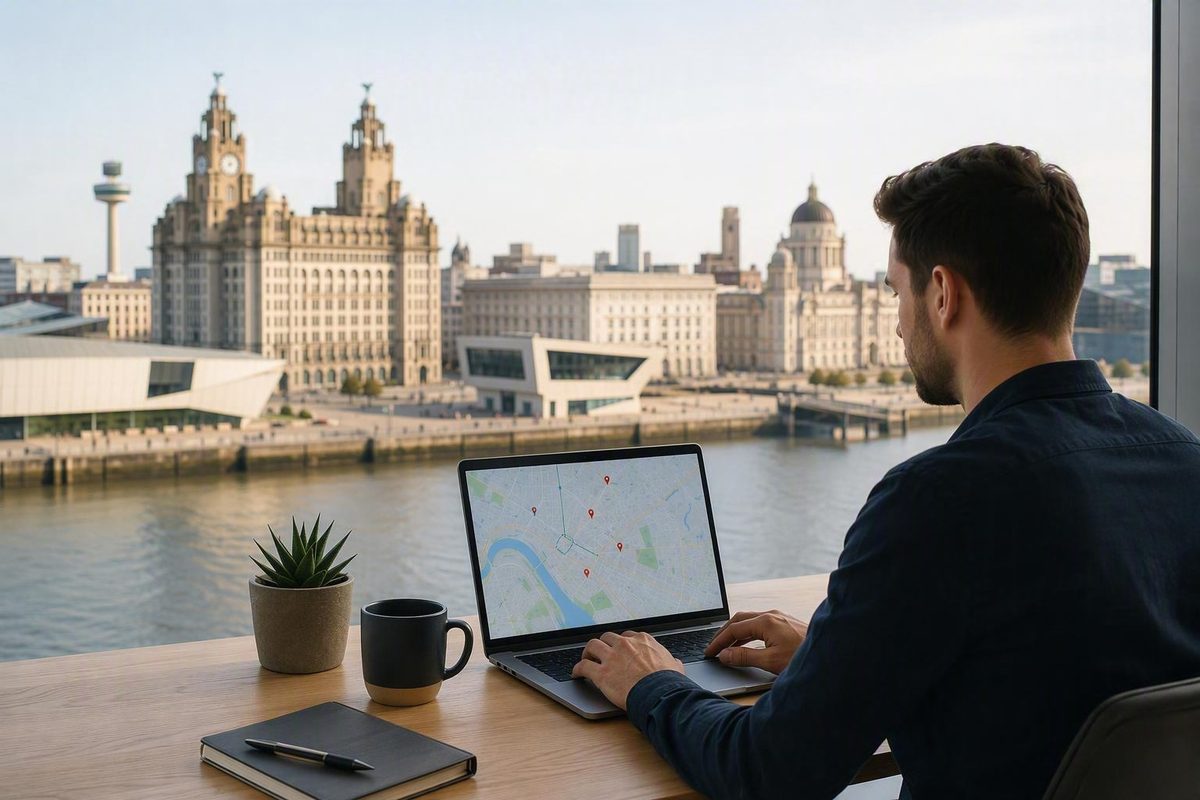
Your business can appear on Maps without a website, but having one usually makes it more competitive in local search.
If you want to boost your Liverpool business visibility on Google Maps, the work is usually less complicated than it sounds. Good local SEO is not about tricks. It is about giving Google and potential customers a consistent, trustworthy picture of your business: what you do, where you are, which areas you serve, and why people should choose you.
For Liverpool businesses, that matters because Maps often becomes the shortlist before a customer ever reaches a website. A person looking for a clinic, restaurant, solicitor, plumber, or shop may compare hours, reviews, location, and legitimacy right inside the map results. If your profile is weak, incomplete, or inconsistent, you can lose that decision before the visit even begins.
This guide keeps the focus where it belongs: practical Google Business Profile work, review management, citation cleanup, and website support. It is written as a general Google Maps playbook for businesses in Liverpool and nearby areas such as Liverpool City Centre, Anfield, Toxteth, and Bootle, using those places as examples rather than promising that one neighbourhood tactic works everywhere.
Why Google Maps Rankings Matter for Liverpool Businesses
A Liverpool-focused guide, citing BrightLocal research, says that more than 80% of customers check map-based results before choosing a local business; that figure is best treated here as attributed rather than independently verified, but it still points to the same underlying reality: Maps visibility strongly shapes local discovery and choice for businesses targeting areas across Liverpool and Merseyside (Liverpool Google Maps guide).
That matters because local searches are often fast, practical, and mobile. A customer searching in Liverpool City Centre is rarely looking for a long research session. They want a short list they can trust: opening hours, phone number, reviews, route, and a quick sense of whether the business looks active and legitimate.
That is why prominent Maps positions tend to win first contact. The business does not need to be the biggest brand in Liverpool. It needs to be easy to understand and easy to choose in the moment. When the profile is complete and credible, you reduce friction. Calling is simple. Directions are one tap away. Reviews provide instant social proof.
For smaller firms, that is the opportunity. A local florist, accountant, takeaway, or trades business does not need national visibility to compete. It needs strong local visibility where intent is highest: when someone nearby is ready to compare options and act.
How Google Maps Ranking Works: The Core Factors
Google says local ranking is based primarily on relevance, distance, and prominence, and it also states that there is no way to pay for a better local ranking in its organic local results (Google Business Profile Help).
Distance is the factor most businesses cannot control very much. If a searcher is near Liverpool ONE, Google will often favour nearby options for many query types. If that same search happens from Bootle, Speke, or farther out, the local mix can shift.
That leaves most businesses with the two factors they can influence more directly.
Relevance is about fit. Google needs to understand what your business does and when it should appear. That comes from the category you choose, the services you list, the description you write, the attributes you select, and whether your website reinforces the same message.
Prominence is the trust layer. Reviews, ratings, mentions around the web, links, citation consistency, and overall business visibility all help Google judge whether your business looks established and useful. In crowded categories, prominence is often what separates occasional visibility from more consistent visibility.
The practical takeaway is simple: stop looking for loopholes. You cannot buy organic Google Maps placement, and you cannot fully engineer proximity. What you can do is become easier for Google to interpret and easier for customers to trust.
Step 1: Claim and Verify Your Google Business Profile
The first step is to claim your Google Business Profile, or create one if none exists, and complete verification. Depending on the business and account, verification methods can include email, mail, phone, or video (Google Maps SEO guide).
If you already see a listing for your business, claim that one before creating anything new. Duplicates create confusion for both customers and Google. An unclaimed listing can also carry outdated hours, old phone numbers, or user edits that no longer reflect the business accurately.
If you have more than one real, eligible location, each one should have its own profile rather than being forced into a single listing. Multi-location SEO guidance consistently recommends a separate Google Business Profile for each real location so that the address, categories, hours, photos, and reviews make sense at branch level (multi-location Google Maps guidance).
For service-area businesses, honesty matters. Set the profile up around how the business actually operates. The aim is not to stretch your footprint artificially. The aim is to give Google a clean, accurate representation of a real business that serves real customers.
Step 2: Fully Optimize Your GBP for Relevance
Google advises businesses to keep profile information complete and accurate, including address, hours, category, and relevant attributes, and says that complete information makes a profile more likely to appear for relevant local searches (Google Business Profile Help).
Start with the core details and make sure they are consistent everywhere:
- business name as used in the real world
- full address, if customers can visit you
- main public phone number
- opening hours, including special or holiday hours
- primary category
- secondary categories only where genuinely relevant
- service list and service descriptions
- website URL
- attributes such as parking, wheelchair access, appointment options, or Wi‑Fi where applicable
For most businesses, the biggest gain comes from being specific. A precise category tells Google more than a vague one. If your main offer is boiler repair, family law, physiotherapy, or emergency locksmith work, your profile should reflect that clearly. Your primary category should match the main thing you want to be found for. Secondary categories should support closely related services, not serve as a dumping ground for every keyword variation you can imagine.
Your business description matters too, but it should still sound like a human wrote it. Explain what you do, who you help, and where you are based. If you serve multiple Liverpool areas, say so naturally and only if it is true. A description that mentions Liverpool City Centre, Anfield, or surrounding areas works when it reflects actual operations, not when it reads like a list of search terms.
Parking, accessibility, appointment booking, or extended hours may sound minor, but those details make the listing more useful. That is exactly the sort of completeness Google encourages.
Step 3: Build and Manage Reviews for Prominence
Local SEO guidance consistently treats review quantity, quality, and recency as important local visibility signals, and specifically notes that Google considers review quantity, quality, and recency in local pack rankings (multi-location Google Maps guidance).
That means review building should be steady, not sporadic. A business with a consistent stream of fresh, genuine reviews often looks healthier than one with a large but stale review profile. Recency helps show that the business is active and that customers are still having good experiences now, not just in the past.
Make the request simple. Send the direct review link. Ask politely. If appropriate, invite customers to mention the service they used. Natural, descriptive reviews tend to be more useful than generic praise.
It also helps to respond regularly. Positive reviews deserve thanks. Neutral reviews deserve acknowledgment. Negative reviews deserve calm, professional handling. A thoughtful response shows both customers and Google that the business is engaged rather than neglected.
There is no magic review number that guarantees a stronger Maps position. What matters more is consistency, authenticity, and service coverage. If you want to grow a particular part of the business, that service should eventually show up in the review profile too.
Step 4: Ensure NAP Consistency and Build Citations
NAP stands for name, address, and phone number. Google Maps SEO guidance warns that NAP inconsistencies across the web can confuse search engines and weaken trust in the business data they see (Google Maps SEO guide).
For a Liverpool business, that means auditing every place your contact details appear and fixing the mismatches. Common issues include:
- an old phone number on a directory
- an outdated address after a move
- inconsistent business naming
- a tracking number replacing the main public number
- duplicate listings created by former staff or agencies
- different abbreviations or formatting across platforms
Citations are those mentions of your business on third-party platforms: directories, social profiles, map platforms, review sites, trade portals, and similar listings. The goal is not to appear on every site available. The goal is to appear accurately on the sites that matter, with no uncertainty about who you are or how to contact you.
In practice, that often means checking your website, your Google Business Profile, major social profiles, Bing Places, Facebook, and relevant industry directories first. Accuracy matters more than volume. A smaller number of correct, trusted citations does more for credibility than a long tail of messy ones.
This is also where local specificity matters. If your business is in Liverpool, England, make that identity consistent everywhere. Use the same branded name, the same public phone number, and the same address format. The cleaner your business data is across the web, the more your other local SEO work can stick.
Step 5: Add Photos, Posts, and Keep Active
The most useful photos are usually the most recognisable ones. Exterior shots help people find the entrance. Interior photos reduce uncertainty before a visit. Team photos make the business feel real. Work-in-progress or before-and-after images help service businesses prove that they actually do what the profile claims.
Some SEO advice recommends geo-tagging images. The safer approach is not metadata obsession. It is regular uploads of real, recent, high-quality media.
Posts are still worth using. They are helpful for offers, temporary hours, service updates, events, or seasonal messaging. A restaurant near Anfield might use them for matchday adjustments. A clinic might use them for appointment availability. A trade business might use them to highlight emergency callout coverage or recent project types.
If your profile shows a Q&A area, use it to answer the questions customers ask again and again: parking, booking rules, emergency response, payment methods, access, turnaround times, and service areas. Even when a feature is not a direct ranking lever, it can improve the profile’s usefulness and conversion power.
Step 6: Support Maps with Website and Local Signals
A Google Business Profile does a lot of the work, but it is not the whole story. Local SEO audits regularly point to weak or missing location pages, limited geo-targeted content, missing schema, and poor mobile performance as recurring issues that reduce local relevance and visibility (local SEO mistakes affecting local visibility).
The strongest local websites make two things obvious very quickly: what the business does and where it does it. That means your homepage should not be the only page doing all the work. If you offer several core services, build dedicated service pages. If you target specific areas with real demand, support them with useful local pages that explain the service in that place.
The important word there is useful. A page about “emergency locksmith in Bootle” or “accountant for Liverpool City Centre businesses” can help when it contains unique information, realistic local context, and service-specific detail. Thin pages that just swap out place names rarely add much value.
Technical basics still matter. Your website should work well on mobile devices, load reasonably fast, and use relevant structured data where appropriate so search engines can interpret your business information more clearly. If your address, service descriptions, and local pages reinforce the same signals as your Business Profile, relevance becomes easier to establish.
Local backlinks add another layer of support. Partnerships, local organisations, community activity, industry bodies, and coverage from relevant local sites can all help strengthen authority. The pattern is the same as with citations: quality and fit beat raw volume.
A website is not always required to exist on Maps, but it usually makes the business more competitive. It gives Google more context, more consistency, and more evidence about what you do and where you do it.
Common Mistakes Hurting Liverpool Maps Rankings and Fixes
Common local Maps problems tend to be unglamorous: incomplete or inaccurate Google Business Profiles, ignored reviews, inconsistent NAP data, weak local content, poor mobile usability, missing categories or attributes, and neglected posts or Q&A sections (common Google Maps ranking mistakes).
If visibility has slipped, start with an audit instead of guessing. Check the basics first:
- confirm the business name, address, phone number, and hours
- review primary and secondary categories
- make sure services are listed accurately
- compare website details against GBP details
- look for duplicate or outdated listings
- review the freshness and quality of photos
- inspect the review profile for recency and response gaps
- test the website on mobile
After that, look at content and maintenance. Many profiles are not failing because of one dramatic mistake. They are slipping because nobody has touched them properly in months. Reviews go unanswered. Photos are old. Service lists are incomplete. The website has no real local landing pages. In competitive local categories, steady upkeep often beats occasional bursts of optimisation.
You should also watch your website-side signals over time.
If that cleanup feels bigger than a DIY task, it helps to know what good support should actually include. This guide on how to choose a local SEO company can help you evaluate providers based on deliverables, cleanup needs, reporting, and fit rather than sales language.
Bottom line: if you only act on four things first, make them these: verify the profile, complete every important field accurately, build a steady flow of real reviews, and make your business details match everywhere online. Local results are mainly based on relevance, distance, and popularity Tips to improve your local ranking on Google - Google Business Profile Help.
Then track what happens. Watch calls, direction requests, review growth, and the performance of your key local landing pages.
Can you rank on Google Maps without a website?
Yes, but it is usually harder.
A strong Google Business Profile, accurate categories, complete information, solid reviews, and clean citations can still make a business visible for some searches. That is especially true in lower-competition categories or highly proximity-driven situations.
The problem is that a website gives Google extra context. It can reinforce your services, locations, contact details, and local relevance in a way a profile alone cannot match. So while a website is not always essential for existence, it is usually valuable for competitiveness.
How does proximity affect Liverpool Maps searches?
Proximity means the searcher’s location can materially change what appears.
That is why some businesses appear to rank well in one part of Liverpool but less well in another.
Because you cannot fully control where the searcher is, proximity is the factor to respect rather than obsess over. Focus most of your effort on relevance and prominence, where your business has more room to improve.
What are the best categories for a Liverpool service business?
Usually, the best category is the most specific accurate description of your main service.
If you are mainly a roofer, choose the category that best reflects roofing. If you are primarily a family solicitor, accountant, physiotherapist, or locksmith, your primary category should reflect that main commercial identity, not the broadest label you think might cast the widest net.
Secondary categories are useful when they describe real adjacent services. They are not a substitute for clarity. Your primary category should answer the question, “What is this business first and foremost?”
Do GBP posts improve rankings?
They may help indirectly, but the direct ranking effect is not clearly confirmed.
The most defensible reason to use posts is not that they are a guaranteed ranking lever. It is that they make the profile look current, give customers more information, and can improve engagement once you are already visible.
Used badly, they become another neglected area of the profile. So they are worth doing, just not worth treating as a shortcut.
Why isn’t my business showing in Liverpool near-me searches?
Usually because one or more core local signals is weak, incomplete, or inconsistent.
Typical causes include an unverified or incomplete profile, weak categories, missing services, inconsistent business details across listings, poor review activity, thin local website content, or a mobile experience that makes the site less useful.
There is also the proximity factor. A “near me” search is strongly shaped by where the searcher is standing or searching from, so even a well-optimised business will not appear equally across every part of Liverpool.
The best next step is a careful audit. Check verification, categories, hours, reviews, photos, NAP consistency, and whether your website clearly supports your Liverpool service intent. Most of the time, the issue is not mysterious. It is just buried in the details.